How RealSavvy does it
Step 1Pick a package in the builder
Step 2Connect your MLS and Follow Up Boss
Step 3Edit and publish in Savvy Studio
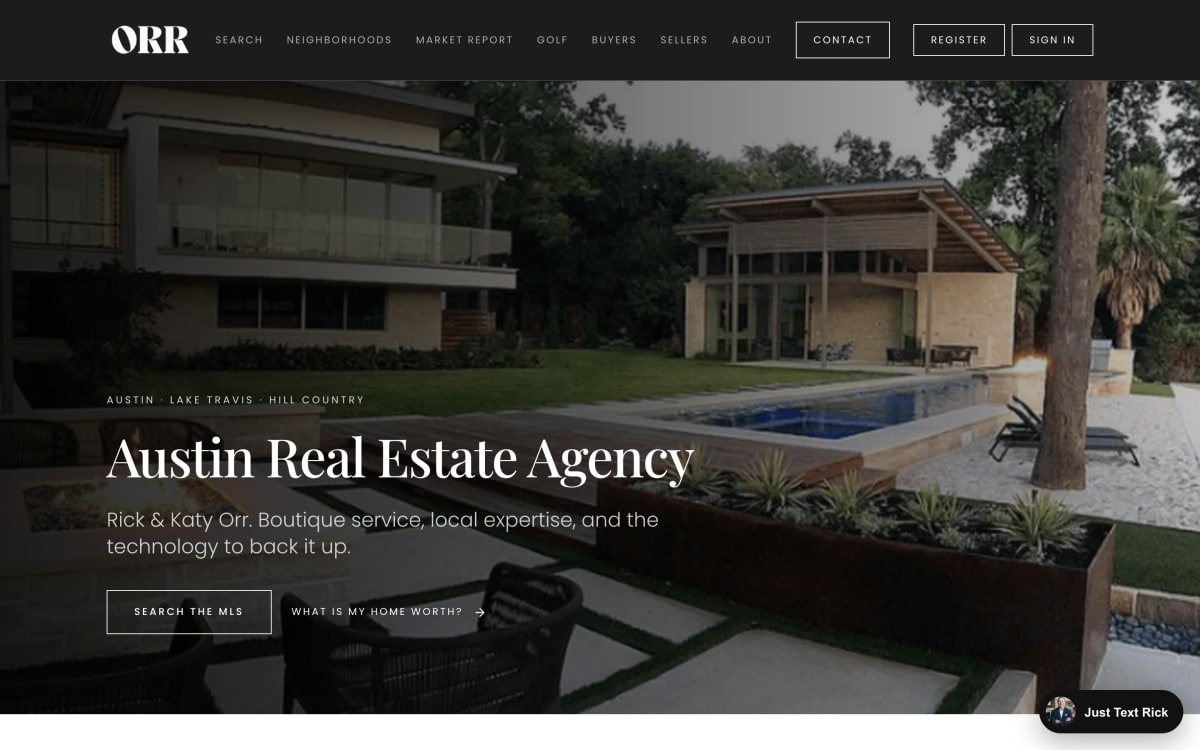
austinrealestateagency.com, a RealSavvy website
austinrealestateagency.com, live on Savvy Studio.

Questions

What people also ask

What are the steps to build a real estate website?

Seven, in order: (1) choose the path. DIY template platform, WordPress with an IDX plugin, or done-for-you; (2) domain and brand basics; (3) IDX access. MLS authorization, an approved vendor, the feed; (4) site structure that ranks. Search-led homepage, neighborhood pages, market-oriented bio; (5) CRM wiring so leads arrive with behavior attached; (6) launch with AI visibility. Schema markup, answer-first content, fast mobile loads; (7) maintenance, budgeted honestly. Steps 3 and 5 decide whether the site produces; they are also the two most commonly botched.

What site structure makes a real estate website rank?

Search-led and locally deep. Homepage: an MLS search above the fold, not a brand film. Neighborhood pages: one per farm area, pairing live filtered inventory with genuine local knowledge. These are the pages that rank for the searches that matter and the pages AI engines cite. Bio: oriented around your market, not your awards. Listing pages: native, at your own URLs. The structural mistake that caps everything: IDX in an iframe, which hands your entire inventory's visibility to the vendor's domain.

How should leads flow from the website to my CRM?

Automatically, carrying behavior. Minimum: every registration and form creates a CRM contact with source attribution. No inbox forwarding, no manual entry. The producing standard: continuous sync, where searches, saved homes, favorites, and return visits keep writing to the contact's timeline after registration. RealSavvy's Follow Up Boss integration is the code-level version. Two-way API, activity on the FUB timeline, running as an embedded app inside FUB, so Smart Lists and action plans operate on what buyers do, not what they typed into a form once.

What does AI search visibility require at launch?

Structure that engines can read and attribute. The checklist: schema markup (Organization, listings, FAQ content), answer-first pages where the first sentence actually answers the question, real URLs for every listing and neighborhood (native IDX is the prerequisite), fast mobile loads, and an llms.txt that orients AI crawlers. As of 2026, buyers increasingly ask ChatGPT, Perplexity, and Google AI Overviews who works a market and where to search. Sites built readable get cited; sites built as script-heavy brochures do not exist in those answers.

How long does building a real estate website take?

The pages take days; the project takes weeks, and IDX sets the pace. Realistic timelines: a done-for-you site is usually live within days of MLS approval; the MLS paperwork sets the pace, not the build. WordPress DIY commonly runs 4-8 weeks for a first build once theme setup, plugin configuration, feed activation, and the inevitable integration debugging are counted. The compression done-for-you buys is mostly the paperwork and wiring running in parallel by people who do it weekly, not faster page design.

Ready when you are.

Pick what you need and see your exact price in two minutes, then sign and pay online. Want to look around first? Click through the real product, no sign-up needed.