IDX
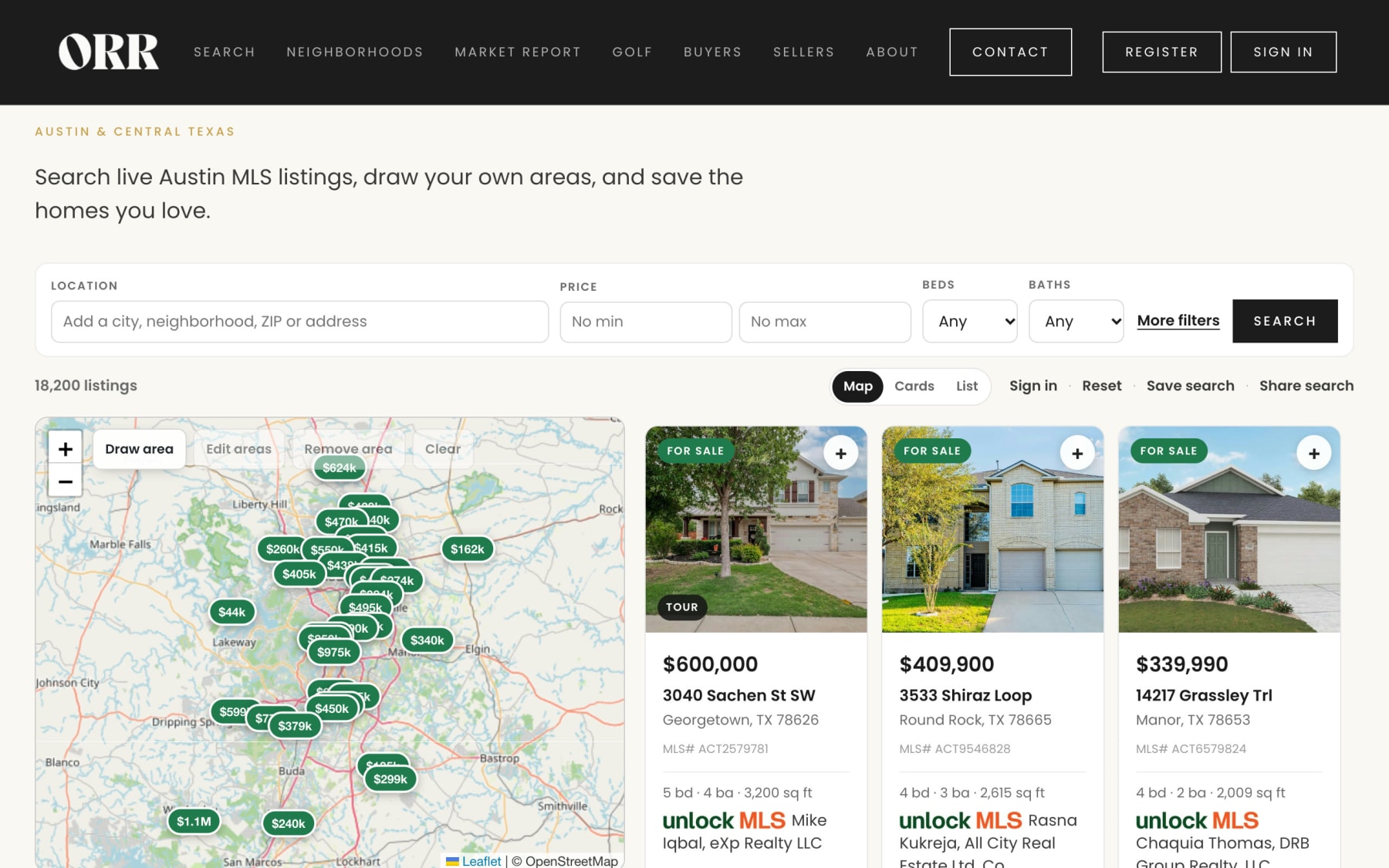
IDX stands for Internet Data Exchange: the MLS rules that let agents show each other's listings on their own websites. RealSavvy turns that into live search on your domain across 300+ MLS feeds, with the attribution your MLS requires and every buyer's activity sent to your CRM.
| Search | Native, on your domain |
| MLS feeds | 300+, refreshed through the day |
| IDX widget for your site | $99/mo plus a $99 setup |
| Website + IDX | $199/mo plus a $250 setup |

Whatever you buy
RealSavvy renders 300+ MLS feeds natively on your site, not in an iframe, so your search pages rank and get cited.
Searches, saves, views, registrations and inquiries land in Follow Up Boss as they happen, with source and tags set.
Website + IDX is $199/mo plus a $250 setup. The IDX widget for your current site is $99/mo plus a $99 setup.
No annual contract. You stay because it works.
Type the change you want in Savvy Studio and it publishes. No ticket, no waiting on a designer.
Listing structured data, FAQ markup and agent schema come built in, so answer engines can read and cite you.
Questions
No. The MLS (Multiple Listing Service) is the database where agents enter and share listings, the system of record. IDX is the permission layer and feed that puts a public-facing subset of that database on agent websites. MLS access requires membership and shows everything, including agent-only fields. IDX shows what the MLS's display rules allow the public to see: active listings, photos, prices, and details, minus fields like showing instructions or commission data.
Licensed agents and brokers who belong to the MLS, through their brokerage's participation. IDX agreements are typically signed at the broker level, then individual agents get sites or widgets under that authorization with an approved vendor. A member of the public, or an unlicensed lead-generation company, cannot get an IDX feed. That is precisely what separates agent websites from scraped or syndicated listing sites, and why IDX data is more accurate and current than portals that buy or scrape data.
Nearly all, with defined exceptions. IDX includes listings from every broker participating in the MLS's IDX program, in most markets, effectively the whole market. It excludes listings from brokers who opted out, sellers who signed an opt-out, and statuses the MLS does not allow displayed. Some MLSs also delay sold-data display or restrict it. The practical answer: an IDX search on an agent's site shows essentially what the big portals show for active inventory, drawn live from the same source of record.
Two very different implementations share the name. Native IDX renders listings as real pages of the agent's website. The agent's design, real URLs for every listing, indexable by Google and readable by AI assistants. Iframe IDX embeds a third-party window inside the page: the search works, but the content technically lives on the vendor's domain, often a subdomain like search.youragent.com. Buyers may not notice the difference; search engines and AI engines absolutely do.
No. Pick your package in the builder, see the exact monthly and setup price, then sign and pay online. If you want to look around first, the interactive demo is open to everyone, no sign-up needed.
Yes. The IDX widget adds MLS search, listing grids and a contact form to the site you already run with one script tag, $99/mo plus a $99 setup, month to month. If you want a new site instead, we copy your current pages across and keep your links working.
Connecting your CRM takes a few minutes. The longer step is your MLS approving the IDX feed, which usually takes a few days, and we handle that with you across 300+ MLS feeds.
Pick what you need and see your exact price in two minutes, then sign and pay online. Want to look around first? Click through the real product, no sign-up needed.
